Featured Article Sponsored by Fortress Building Products, Proud Member of NADRA.org
Tune into any news channel or scroll through the news feed on your phone and it’s nearly impossible to ignore the frequency and intensity of today’s extreme weather events, including wildfires.
According to the National Interagency Fire Center, as of mid-August 2026, more than 48,469 wildfires have burned more than 6.5 million acres nationwide, exceeding the 10-year average for both fires and acres burned to date.
The upward trend in the number of wildfire events is a significant concern for many homeowners, especially those living in high-risk regions. These natural disasters threaten human life and, like a wrecking ball, leave a trail of devastating property damage. But deck builders and outdoor living professionals can deliver peace of mind that a project will withstand the destructive forces of wildfires by working with fire-smart materials and building systems.
This mentality should extend to deck construction. After all, when it comes to mitigating wildfire risk, reducing the ignition potential of your customer’s deck and outdoor living space is critical. If not fire-hardened, decks can ignite from wind-blown embers and act like a fuse, carrying flames straight to the main structure. That’s why many states and local jurisdictions have adopted fire codes that specify how decks in vulnerable regions should be built and what materials they can use.
So, what fire codes are applicable to deck construction? The short answer: fire codes can vary widely depending on where the project is located. For example, the International Wildland-Urban Interface Code (IWUIC) sets requirements for areas in designated Wildland-Urban Interface (WUI) zones. The National Fire Protection Association (NFPA) also has standards outlining minimum safety requirements for infrastructure in wildland areas. In addition, some states where the wildfire risk is high, such as California, have their own fire codes. Once a local building department adopts any of these standards, whether as-is or amended, deck builders need to make sure their projects can meet code.
The tricky part? Fire codes are always evolving. That’s why staying up to date on code changes is key for compliance and making sure outdoor spaces are truly safer for homeowners and communities.
Here is the latest fire code update applicable to fire-resistant deck construction:
California’s new Wildland-Urban Interface Code (CWUIC)
California’s new Wildland-Urban Interface Code (CWUIC) took effect on January 1, 2026, bringing the state’s wildland-fire requirements together in a standalone code. Before 2026, WUI requirements were spread across several places in California’s regulations (California Building Code, Chapter 7a; California Residential Code, Section R337; California Fire Code, Chapter 49). So, for deck builders, the update is actually more about where the code is located within California’s building-code framework—it does not fundamentally change state requirements for fire-resistant deck construction.
The key takeaway remains that fire-resistant design considerations must extend beyond the decking surface alone. CWUIC building code requirements apply to the surface material, the deck substructure, and several other exterior elements vulnerable to flame and burning-ember exposure. The first five feet immediately surrounding the home are also subject to California’s ember-resistant zone requirements, making it even more critical to consider the space below and around a deck as part of a home’s overall wildfire protection strategy.
Meeting fire code requirements for fire-resistant decks with steel deck framing
Deck builders looking to comply with fire codes like the CWUIC and deliver safe and durable outdoor spaces should carefully consider the deck framing material they choose to work with. While fire-retardant treated (FRT) wood is often marketed as a fire-safe framing material and permitted for deck construction under most fire codes, it can still act as a bridge for flames to spread directly to the home if not treated regularly. FRT wood is also hard to source, more expensive, and difficult to work with because of the inconsistent quality of today’s lumber. The required fire treatments will also weaken the wood; the deck frame components can become brittle over time and have an altered load-bearing capacity.
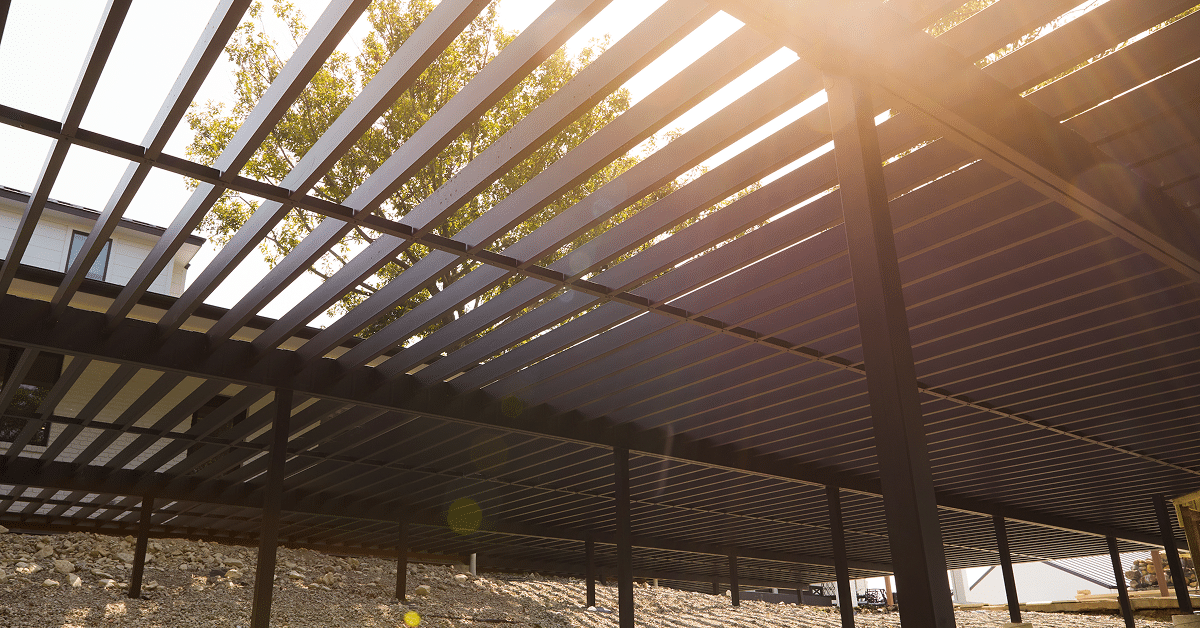
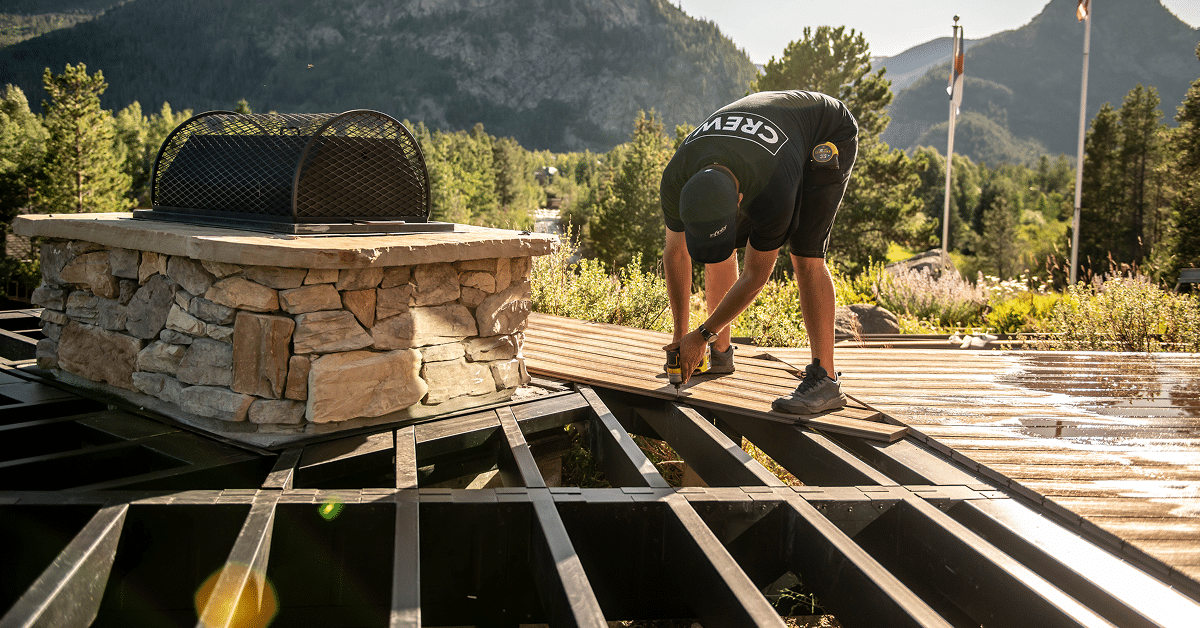
Completely sidelining each of the concerns associated with FRT wood, steel is a noncombustible, ignition- and fire-resistant framing material that lasts. This makes it a smarter deck framing choice for deck builders looking to meet all fire codes, including IWUIC, WUI, CWUIC and NFPA 1140. Deck builders looking to leverage the advantages of steel can put the Evolution steel deck framing system from Fortress Building Products to the test. The steel framing system received a Class A fire-resistant rating after completing the ASTM E84-21a, Standard Test Method for Surface Burning Characteristics of Building Materials. Evolution’s steel components also score safety points with the Insurance Institute for Business & Home Safety, who recommends using noncombustible steel joists in deck assemblies to reduce the vulnerability of a home and any surrounding structures. Ultimately, its proven fire-performance, strength and long-lasting durability has led some of the country’s leading deck builders to choose the steel deck framing system over FRT wood.
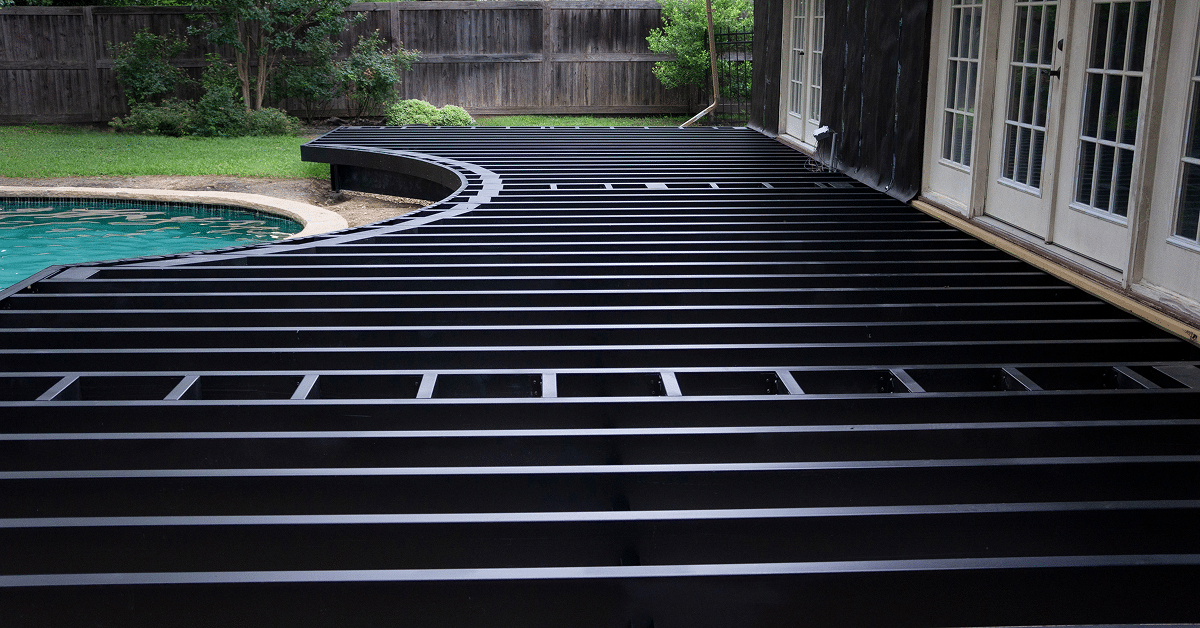
“There’s no better material for a defensible outdoor space than steel,” said Joe Firth, owner of Mountain Deck in California, who has worked exclusively with the Evolution steel deck framing system since 2019. Having lived and worked in California’s WUI regions for years, the seasoned deck builder has seen the devastation fires can cause firsthand, and is fiercely committed to investing in safer, forward-thinking outdoor solutions for his customers. “It is the best product I’ve found. I’ve tested every deck building material out there, and this is the one I trust.”
For outdoor living projects where fire defense is critical, steel is a tested, fire code-compliant solution. Deck builders can discover the advantages of the Evolution steel deck framing system at fortressbp.com/framing.
Always consult your local building department as they may have additional or more specific requirements to achieve fire code compliance.