Featured Article Sponsored by Eva-Last, Proud Member of NADRA.org
For years, the conversation around composite decking centered on durability, low maintenance and aesthetics. But as projects have become larger, more ambitious and increasingly design-driven, the demands placed on decking materials have evolved.
Contractors are looking for lighter boards, greater stability and improved installation efficiencies. Architects want cleaner sightlines, longer spans and fewer structural limitations. Homeowners expect low-maintenance products that can withstand extreme weather conditions while maintaining their appearance for years to come.
Meeting these expectations requires more than incremental product improvements.
It requires smarter engineering.
Enter Glass Fiber Reinforcement
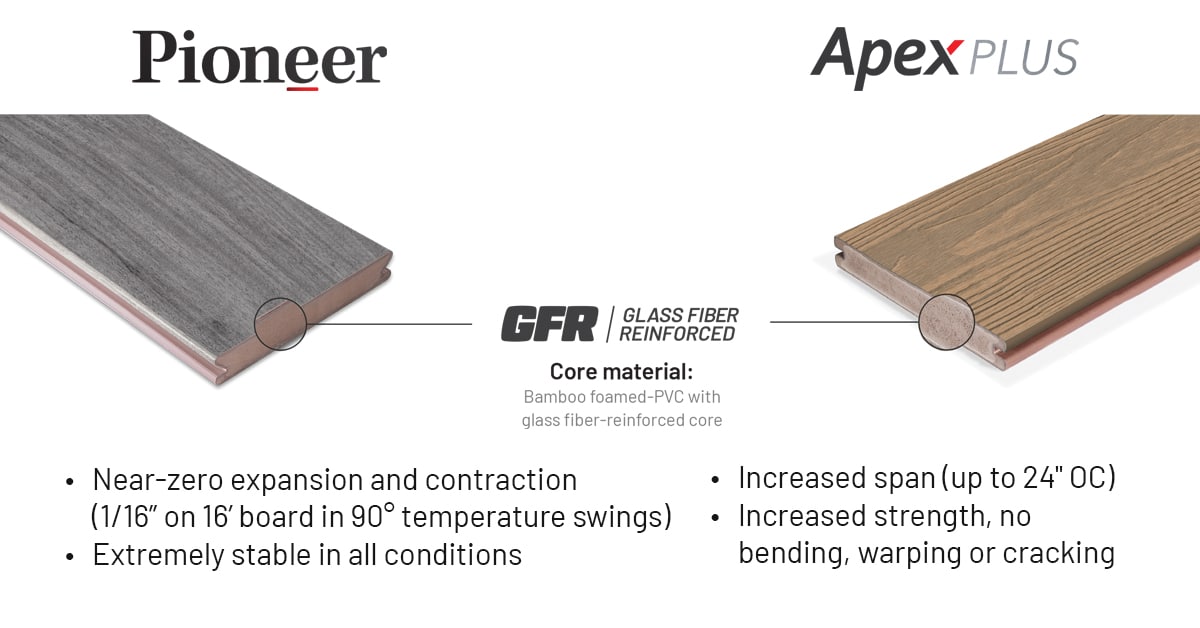
Glass Fiber Reinforcement (GFR) technology, found in Eva-Last’s Pioneer, Apex PLUS and Eclipse decking, is rapidly emerging as one of the most significant advancements in composite decking performance.
While glass fiber has long been used in aerospace, automotive and marine applications where strength-to-weight performance is critical, its integration into composite building materials is helping redefine what decking can achieve.
Rather than simply adding more material to improve performance, GFR technology allows Eva-Last to engineer boards that are stronger, stiffer and more dimensionally stable without dramatically increasing weight.
The result is a smarter approach to performance.
Why Stability Matters
One of the greatest challenges facing any outdoor building material is movement.
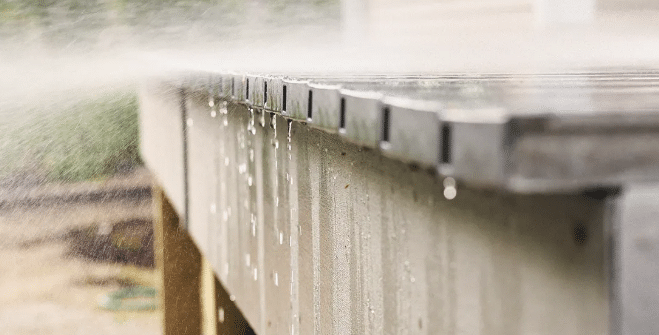
Deck surfaces can experience temperature swings exceeding 100°F (38°C) between cool mornings and peak summer afternoons in many regions. Combined with seasonal weather fluctuations, moisture exposure and constant foot traffic, these conditions place continuous stress on decking boards and substructures.
Over time, expansion and contraction can affect board alignment, fastening systems and overall aesthetics. This has historically been one of the primary challenges associated with PVC decking, where greater thermal movement can require additional consideration during design and installation.
This is where reinforcement technology becomes particularly valuable.
By improving board stiffness and structural integrity, GFR technology helps reduce thermal movement, improve dimensional stability and maintain straighter installations over time.
For contractors, that means greater confidence on site. For homeowners, it means a deck that continues to perform and look its best year after year.
The Next Evolution of Composite Design
At Eva-Last, the evolution of composite decking extends beyond reinforcement technology alone. The company’s product development teams work alongside leading specialists in polymer technology, material engineering and performance-enhancing additives to continually refine formulations and optimize performance. Just as importantly, product innovation is shaped by real-world feedback gathered from contractors, installers, architects and project owners across thousands of projects worldwide.
This combination of advanced material science and practical field experience helps ensure every innovation delivers meaningful benefits where it matters most: on the jobsite and in the finished project.
The Future Is Engineered
Through advanced technologies such as Glass Fiber Reinforcement, Eva-Last continues to push the boundaries of what’s possible in outdoor building materials, delivering solutions that are stronger, more stable and built for the realities of modern construction.
From Apex PLUS to Eclipse and Pioneer, the next generation of composite decking has already arrived.
Learn more about Eva-Last’s GFR-enhanced decking solutions at http://www.eva-last.com/us