
FOR IMMEDIATE RELEASE
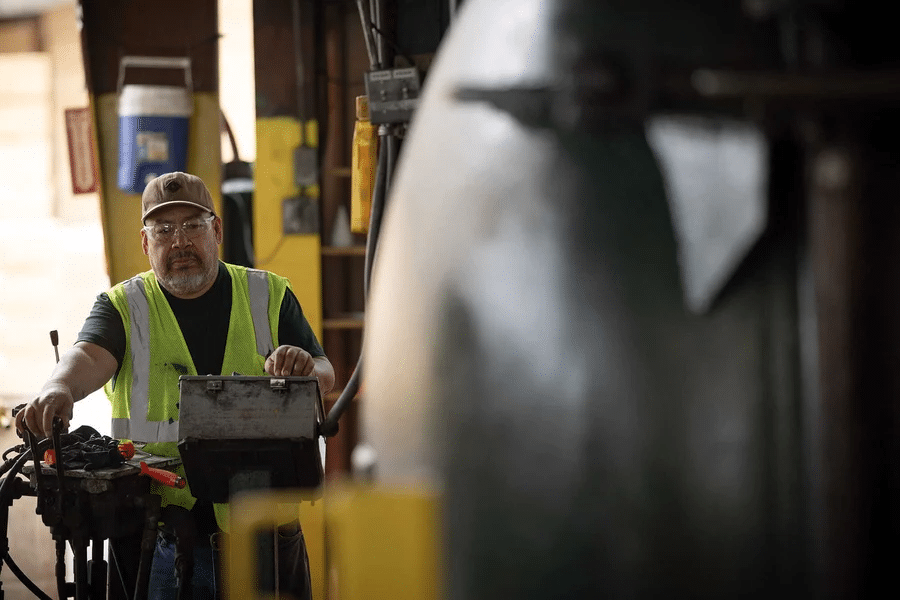
There’s a lot that happens to a piece of treated lumber before it ever reaches your jobsite. This month, we’re going behind the scenes: inside the pressure-treating cylinder, into what separates TrueFrame™ Joist from conventional treated framing, and inside the training that helps keep the treating process sharp.
Inside the Cylinder: How Pressure Treatment Works
Think of a piece of lumber as a tight bundle of microscopic straws. Pressure treatment is designed to drive preservative into that wood structure, helping protect lumber against decay and insects.
But what does that actually look like at a treating plant?
The process begins before lumber enters the cylinder. Lumber is dried to around 19% moisture content, removing water from the wood to make room for the treating solution.
From there, a bundled charge of lumber enters a steel treating cylinder that can stretch 50 to 100 feet long. Once the cylinder is sealed, a vacuum removes air from the cylinder and wood cells. Treating solution, roughly 99% water and 1% preservative, then fills the cylinder.
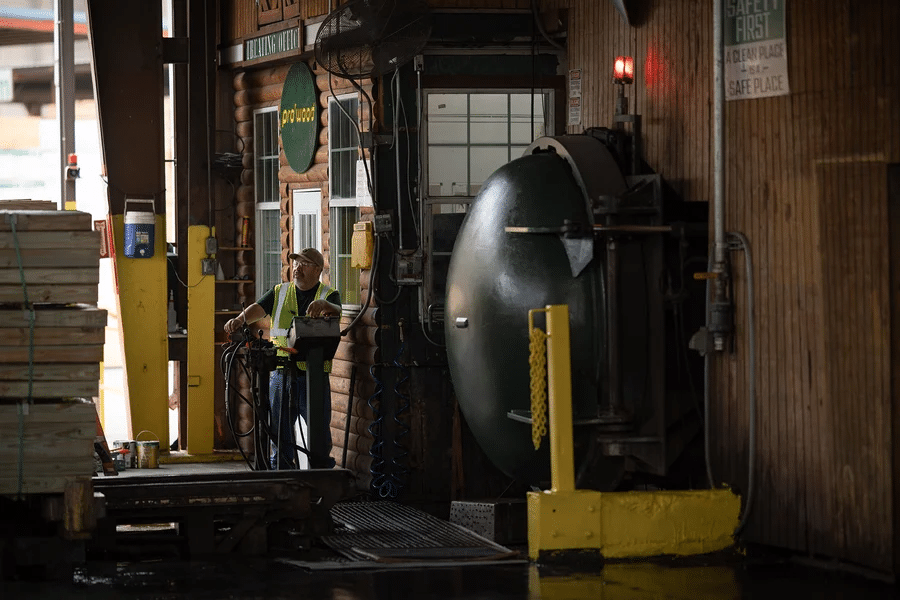
Pressure takes over next. At up to 150 to 200 PSI, the treating solution is driven into the wood. Operators monitor how many gallons the charge absorbs until it reaches its target.
Once treatment is complete, the solution drains back to a holding tank and a second vacuum draws excess liquid from the lumber. Samples are then tested to ensure proper preservative retention.
Finally, end tags are placed on the lumber, labeling the treatment level of the wood. This allows for builders to easily see the use case for each piece of lumber.
Why does all of that matter to a builder?
Because pressure-treated lumber isn’t simply coated on the outside, it is deep within the lumber. The pressure-treatment process uses vacuum and pressure to move wood preservative into the lumber itself, helping provide the protection required for real-world outdoor applications.
Learn More About Pressure-Treated Lumber
What Makes TrueFrame Joist Different?
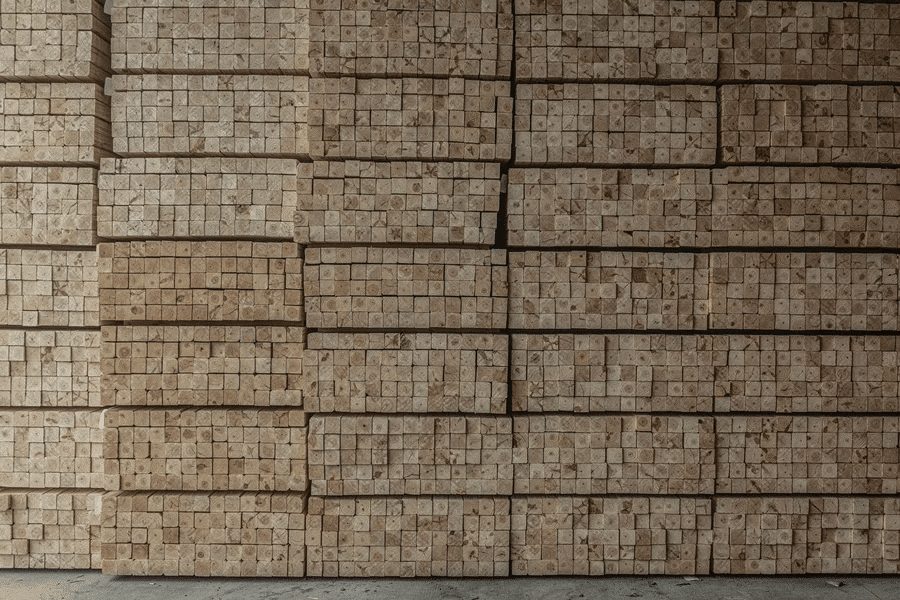
On a deck frame, small inconsistencies can mean more prep before the first deck board goes down. That is exactly where TrueFrame™ Joist is designed to be different.
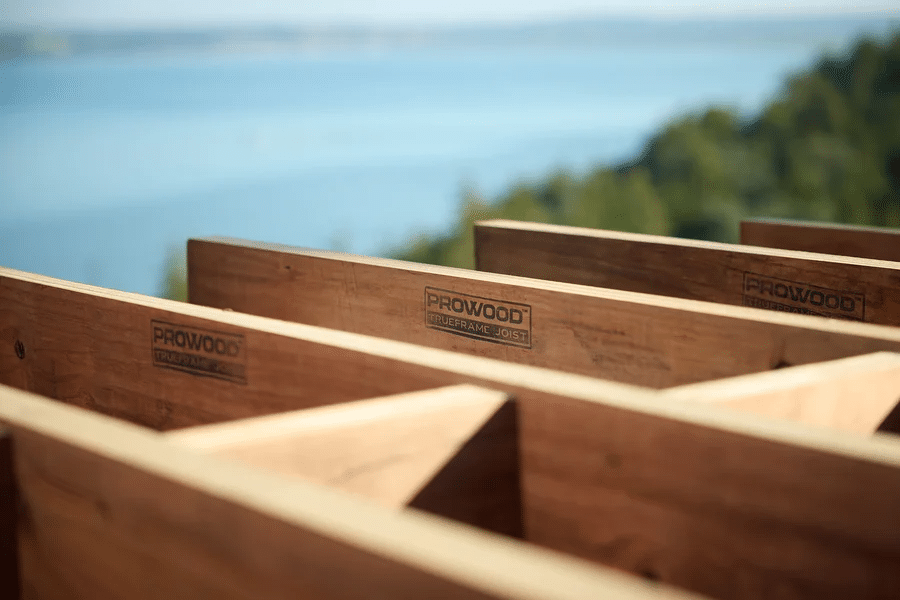
TrueFrame Joist starts as #1 Grade Southern Yellow Pine lumber that receives an enhanced additive during the treatment process for stability. It is then kiln-dried after treatment (KDAT) and factory-planed for uniform sizing.
Standard Pressure-Treated Joist
Standard pressure-treated lumber gives you the treated framing material you need to build a structure that will stand the test of time. But individual boards can require sorting or edge preparation as you work toward a consistent framing plane. That extra prep adds up and can become a time sink as you work job to job.
TrueFrame Joist
TrueFrame adds three important steps that separate it from a standard pressure-treated joist:
- Kiln-dried after treatment (KDAT): ProWood’s KDAT process removes excess moisture after pressure treatment, producing lighter, more dimensionally stable lumber.
- Factory-planed edges: TrueFrame Joist is factory-planed for more uniform sizing, reducing the need for jobsite sorting or edge planing before decking begins.
- Enhanced treatment: TrueFrame Joist is treated with MCA and an additional proprietary additive that improves the lumber’s stability over time.
The difference is straightforward: it’s a ground contact ready joist that is made to reduce the time needed to build a level and consistent frame.
Source: ProWood, a proud member of NADRA.org